In today’s digital world, businesses need more than just a good product or service to succeed. They also need a strong online presence. This is where digital marketing plays an important role. From social media and search engines to websites and email campaigns, digital marketing helps businesses connect with the right audience online.
For beginners, digital marketing may seem complicated because it includes many different areas. However, understanding its basic concepts can make it much easier to learn and apply.
What Is Digital Marketing?
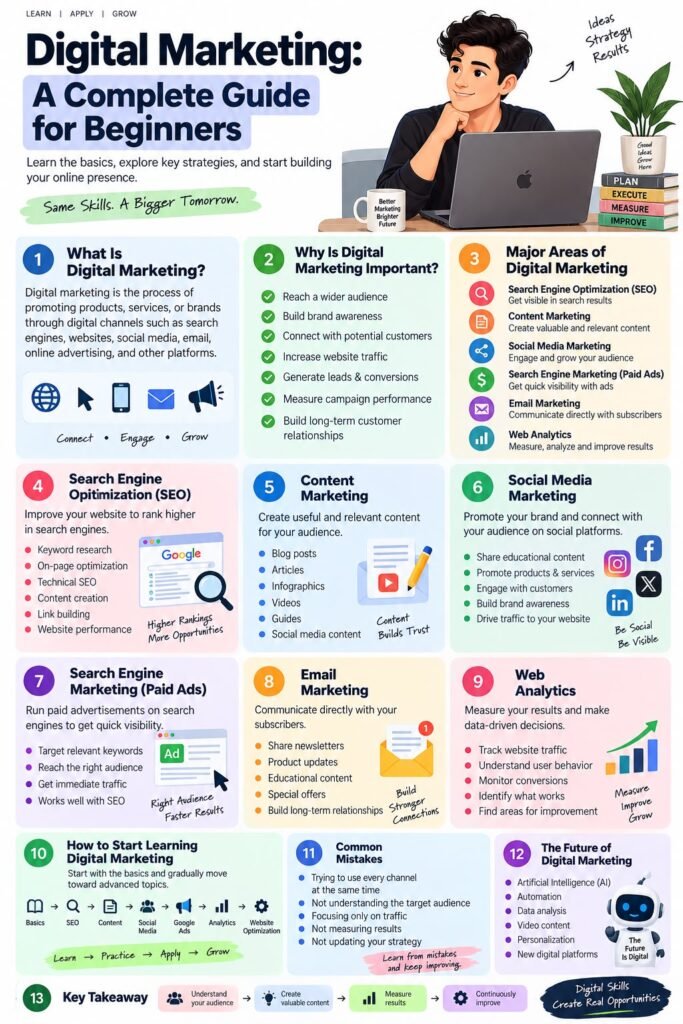
Digital marketing is the process of promoting products, services, or brands through digital channels. These channels can include search engines, websites, social media platforms, email, online advertising, and other digital platforms.
Unlike traditional marketing, digital marketing allows businesses to reach specific audiences and measure the performance of their campaigns.
For example, a business can use SEO to appear in search results, social media to communicate with customers, and paid advertising to promote a product to a targeted audience.
Why Is Digital Marketing Important?
The internet has changed how people discover businesses and make purchasing decisions. For example, before buying a product or service, many people search online for information, reviews, comparisons, and recommendations.
A strong digital marketing strategy helps businesses become visible where their potential customers are already spending time.
Some important benefits include:
- Reaching a wider audience
- Building brand awareness
- Connecting with potential customers
- Increasing website traffic
- Generating leads
- Measuring campaign performance
- Building long-term customer relationships
Major Areas of Digital Marketing
Digital marketing is made up of several important areas. Understanding each area is useful for anyone who wants to build a career in digital marketing.
1. Search Engine Optimization (SEO)
SEO is the process of improving a website so that it can appear more prominently in search engine results.Learn more about SEO with Google’s SEO Starter Guide.
SEO includes activities such as keyword research, on-page optimization, technical SEO, content creation, link building, and website performance improvement.
For example, if someone searches for “digital marketing services,” businesses can use SEO techniques to improve their chances of appearing for relevant searches.
2. Content Marketing
Content marketing focuses on creating useful and relevant content for an audience.
Blog posts, articles, infographics, videos, guides, and social media content are common examples.
Good content should provide value instead of simply promoting a product. When people consistently find useful information from a brand, it can help build awareness and trust.
3. Social Media Marketing
Social media marketing involves promoting a brand and communicating with audiences through social media platforms.
Businesses can use social media to:
- Share educational content
- Promote products and services
- Engage with customers
- Build brand awareness
- Drive traffic to their website
A successful social media strategy usually focuses on consistent, useful, and audience-focused content.
4. Search Engine Marketing
Search engine marketing can involve paid advertising on search engines. Businesses can create advertisements that appear when users search for relevant terms.
For example, a company selling laptops might create an advertisement targeting searches related to buying laptops online.
Paid campaigns can provide quick visibility, while SEO generally focuses on improving organic search visibility.
5. Email Marketing
Email marketing allows businesses to communicate directly with subscribers.
Companies can use emails to share newsletters, product updates, educational content, special offers, and other information.
A good email marketing should provide useful information and respect the subscriber’s preferences.
6. Web Analytics
Digital marketing becomes much more effective when businesses measure their results.
Tools such as analytics and search-performance platforms can help marketers understand information such as website traffic, user behavior, search performance, and conversions.
Data helps marketers identify what is working and where improvements may be needed.
How to Start Learning Digital Marketing
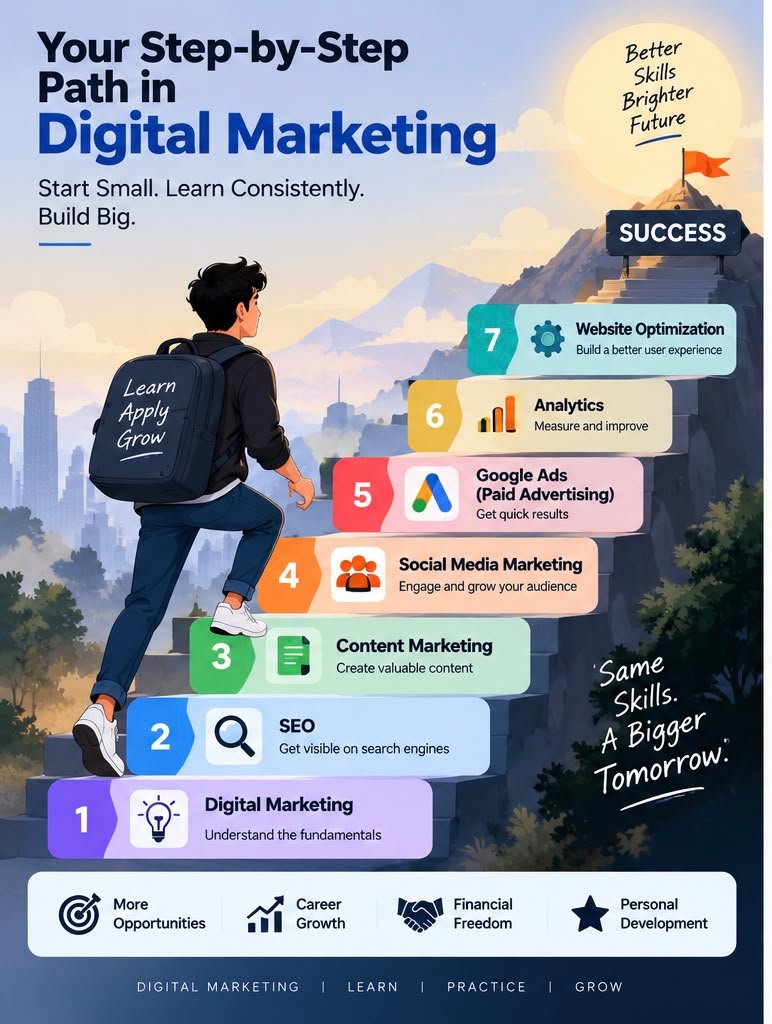
If you are a beginner, you do not need to learn everything at once. Start with the fundamentals and gradually move toward advanced topics.
A simple learning path can be:
Digital Marketing Basics → SEO → Content Marketing → Social Media → Google Ads → Analytics → Website Optimization
Practice is also extremely important. Creating your own website or blog gives you an opportunity to apply what you learn.
For example, you can practice keyword research, write SEO-friendly articles, optimize images, improve page titles and descriptions, and monitor website performance.
Common Digital Marketing Mistakes
Beginners often make a few common mistakes. One is trying to use every marketing channel at the same time without understanding the target audience.
Another mistake is focusing only on traffic instead of meaningful results. Getting visitors is useful, but businesses also need to consider engagement, leads, conversions, and customer experience.
In addition, digital marketing should not be treated as a one-time activity. Search trends, audience behavior, platforms, and competition can change, so marketers need to continuously learn and improve.
The Future of Digital Marketing

Digital marketing continues to evolve with changes in technology and consumer behavior. Artificial intelligence, automation, data analysis, video content, personalization, and new digital platforms are influencing how businesses communicate with audiences.
However, the basic principles remain important: understand your audience, create valuable content, communicate clearly, measure results, and continuously improve.
Conclusion
Digital marketing offers many opportunities for businesses and professionals. From SEO and content marketing to social media, paid advertising, and analytics, each area contributes to building a strong online presence.
For beginners, the best approach is to learn one concept at a time and apply it through practical projects. With consistent learning and hands-on experience, digital marketing can become a valuable professional skill.
Digital marketing is not just about promoting a business online—it is about reaching the right audience, providing value, and building meaningful connections through digital channels.
Digital Marketing at a Glance
Digital marketing is a broad field that includes multiple channels and strategies:
• SEO: Improve organic search visibility
• Google Ads / SEM: Reach users through paid search advertising
• Social Media Marketing: Build and engage an audience on social platforms
• Content Marketing: Attract users with useful content
• Email Marketing: Communicate directly with customers
• Affiliate Marketing: Promote products through partners
• Influencer Marketing: Reach audiences through creators
• Analytics: Measure traffic, conversions, and campaign performance
Frequently Asked Questions About Digital Marketing
What is digital marketing?
Digital marketing is the promotion of products, services, or brands through digital channels such as search engines, websites, social media, email, and online advertising platforms.
What are the main types of digital marketing?
The main types include SEO, SEM, social media marketing, content marketing, email marketing, affiliate marketing, influencer marketing, and mobile marketing.
Is digital marketing difficult to learn?
Digital marketing can be learned step by step. Beginners can start with the fundamentals and gradually learn areas such as SEO, Google Ads, social media marketing, content marketing, and analytics through practice.
How long does it take to learn digital marketing?
The time required depends on your learning goals, previous knowledge, and how much you practice. You can learn the fundamentals relatively quickly, but developing practical expertise requires continuous learning and hands-on experience.
Is SEO part of digital marketing?
Yes. SEO is one of the major areas of digital marketing. It focuses on improving a website’s visibility in organic search engine results.
What is the difference between SEO and Google Ads?
SEO focuses on improving organic visibility in search engines, while Google Ads allows businesses to pay for advertising placements. SEO generally focuses on long-term organic visibility, while paid advertising can provide visibility through advertising campaigns.
What are the career opportunities in digital marketing?
Digital marketing offers various career paths, including SEO specialist, PPC specialist, social media marketer, content marketer, email marketer, digital marketing analyst, media buyer, and digital marketing manager.